America is about to turn the page on Barack Obama’s four-year experiment in big government.
Mitch McConnell (Boy, was he ever wrong -RF)
The future is not Big Government. Self-serving politicians. Powerful bureaucrats. This has been tried, tested throughout history. The result has always been disaster. President Obama, your agenda is not new. It’s not change, and it’s not hope.
Rush Limbaugh (From his lips to God’s ear, but alas, I fear God isn’t listening – RF)
Conservatism is a hard choice for a society that has become accustomed to big government and big entitlements promoted by liberals.
Jesse Helms (He wasn’t always wrong – RF)
The above conservatives, some would call them hard-line conservatives, are “against” big government. In post after post I rail against “big government” and with good reason. But can we ever change it now that we have allowed it to engulf our nation? Is it actually possible to go backwards? It appears that Jesse Helms had the correct nostrum. (I can’t believe I just wrote that!) If the way “big government” treats the agricultural sector is an example, then the answer is a firm, “NO!” Witness the two pieces of legislation recently put forth by the Senate and the House that they euphemistically call the “Farm Bill.” According to our stalwart politicos they are “reforming” the way the US government treats this sector. Yea, right!
According to our Senators and Representatives their respective bills promote cheaper, more sensible policy than what would occur if the current programs were simply extended. American “farm policy” over several decades has been set by these so-called “farm bills.” The last such bill was passed in 2008. Many Americans, like myself, wonder why the “farm bill” needs to subsidize a sector of our economy and a group of individuals (farmers) who are doing quite well.
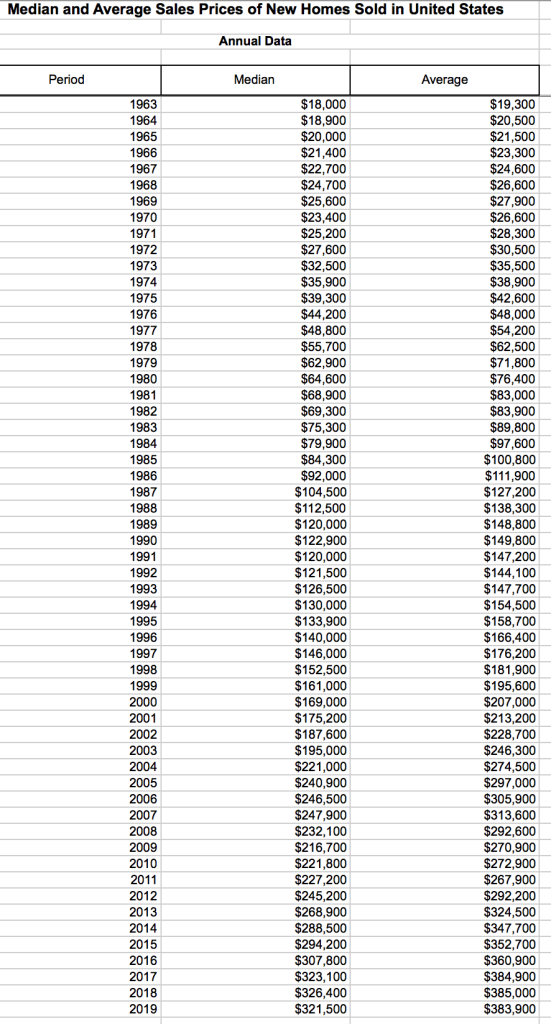
Farmers have benefited from an historic run-up in grain prices driven by surging demand in nations such as China and India, poor weather in some important producing nations and the increasing use of corn and other crops to make biofuels such as ethanol. To say that farmland values are skyrocketing is an understatement.
Does that look like a graph of your “land value?” But you are subsidizing them!
[From: Why (sigh) farm subsidies survive, by Robert J. Samuelson] “The explanation is force of habit. Since the Great Depression of the 1930s, when there were plausible reasons to aid farmers, government has consistently accorded agriculture special treatment. The politics of doing so long ago became self-perpetuating. Without the massive subsidies, the Agriculture Department would be far less important. So would the congressional agriculture committees and the crowd of farm groups (sometimes, it seems, one for almost every crop) that lobby for benefits. And certainly the farmers who receive payments and protections feel entitled to them.” If Mr. Samuelson is correct (and I greatly admire his opinion) we are doomed to perpetual “big government.”
Wait! Stop, bellow you! Why do you insist on putting quotes around the term? Because, answer I, if one wishes to give it an accurate name it should be called the “food stamp bill.” The scope of the farm bill has expanded over time, to the point where farm subsidies, as typically understood, now make up a relatively small share of the total spending on the farm bill (about 15%) – but not “so small a share” that they shouldn’t be eradicated. Nutrition programs, including what used to be known as “food stamps,” make up the lion’s share of the budget (see below) — about $80 billion per year — and the bill now includes energy and environmental programs, too. What’s up with that? Don’t we already have huge bureaucracies to deal with “energy” and “the environment?”
“Nutrition assistance” is the politically correct term for food stamps. Of course, there are no “stamps” anymore. The recipient is given a credit card. Audits have shown that vast amounts of this money are not spent on food – large withdrawals in Las Vegas, for example.
[From: Why (sigh) farm subsidies survive, by Robert J. Samuelson] “All this creates a powerful and shared vested interest in safeguarding the status quo, even as different interest groups and their congressional champions fight ferociously over the structure and distribution of benefits. The cost has been considerable. From 1995 to 2012, the various subsidies totaled $293 billion — more than $16 billion annually — according to the Environmental Working Group (EWG), a critic of present programs. This understates the true costs, because it includes only the on-budget costs of explicit subsidies. Excluded are higher consumer prices paid on some products (sugar, for instance) that are partially shielded from market competition.“
The Senate (controlled by the Democrat Party) says its bill will save $24 billion. That seems a lot, but it is spread out over 10 years. Farm subsidies alone, only 15% of the budget, will total $190 billion over the same time period. As well, the “savings” may never be realized as any number of “provisions” can subvert the “cuts.” Therefore, if “x” or “y” happens, no cuts and potentially more spending! Here is an example. Savings come from a reduction in “direct payments” (i.e., they don’t just hand the farmer a check). The payments are substituted, for example, with “drought insurance.” Well, say you, that seems reasonable. Indeed it does, respond I, unless there is a drought in which case the insurance covers 40% and you and I, as taxpayers, pick up the other 60%. Lucky us!
[From: Why (sigh) farm subsidies survive, by Robert J. Samuelson] “The survival of farm subsidies is emblematic of a larger problem: Government is biased toward the past. Old programs, tax breaks and regulatory practices develop strong constituencies and mindsets that frustrate change, even when earlier justifications for their existence have been overtaken by events (see footnote). It’s no longer possible to argue that agricultural subsidies will prevent the loss of small family farms, because millions have already disappeared. It’s no longer possible to argue that subsidies are needed for food production, because one major agricultural sector — meat production — lacks subsidies and meat is still produced.
“The larger lesson must be discouraging. Among other qualities, good government requires the capacity to adapt to change. It needs to discard what doesn’t work or is no longer necessary. It needs to devote its limited resources — in time, skill and money — to the problems where it might do some good. In the best of circumstances, this is difficult. But routine politics compounds the difficulty, as the immortal farm subsidies and endless debates over budget deficits attest.”
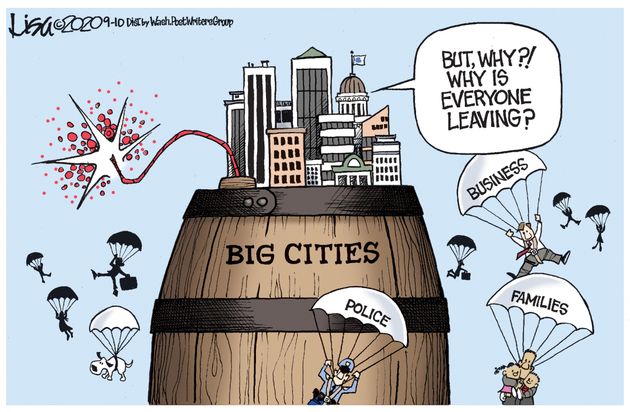
My friends, big government isn’t just “big.” It is immense, enormous, colossal, mammoth, monumental, gargantuan, elephantine, titanic, Brobdingnagian, humongous, astronomical… But sadly, those that run our big government believe it is commodious. Big government does not want to change.
Roy Filly
Footnote:
Federal Helium Program: How temporary becomes forever
President Ronald Reagan tried to get rid of it. So did President Bill Clinton. The Federal Helium Program — left over from the age of zeppelins (the government stepped in to guarantee a supply of helium for Zeppelins in 1925. Eighty eight years later the “Zeppelin threat” is long over, but the big government program survives – RF). It is an infamous symbol of Washington’s inability to cut what it no longer needs. The House voted 394 to 1 to keep it alive (yes, the House, controlled by the Republican party – RF).
“Many people don’t believe that the federal government should be in the helium business. And I would agree,” Rep. Doc Hastings (R-Wash.) said on the House floor before the vote. But at that very moment, Hastings was urging his colleagues to keep the government in the helium business. “We must recognize the realities of our current situation,” he said.
The problem is that the private sector has not stepped into the role that government was giving up. The federal helium program sells vast amounts of the gas to U.S. companies that use it in everything from party balloons to MRI machines at cheap (subsidized) prices. If the government stops, no one else is ready. Thus, government interference has subverted capitalism yet again. The free market couldn’t compete with the government. SO IT DIDN’T!
Today, the program is another reminder that, in the world of the federal budget, the dead are never really gone. Even when programs are cut, their constituencies remain, pushing for a revival.
Two other programs axed in Clinton’s “Reinventing Government” effort — aid to beekeepers and federal payments for wool — returned, zombielike, a few years later. Now the helium program may skip the middle step and be revived without dying first.